Story / The Minotaur
The Minotaur, Crete and the myth
A Plague Tale has always been about a curse with a name. Resonance moves that idea onto Crete and hangs it on the oldest monster story Europe has — which is also the part of the game reviewers argue about.
What is actually confirmed
- Where is it set?
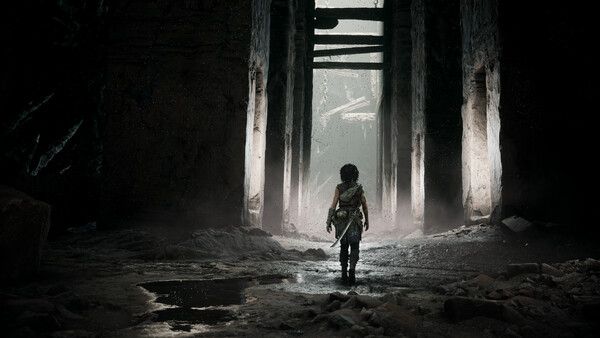
- The Minotaur's Island — which is Crete, home of the labyrinth in the myth. Sophia is a plunderer on the run, and the island's story is what the game is built around.
- When is it set?
- Fifteen years before A Plague Tale: Requiem, in Sophia's medieval present. The game also moves into ancient Minoan times, and what happens there shapes the present.
- Is the Minotaur in it?
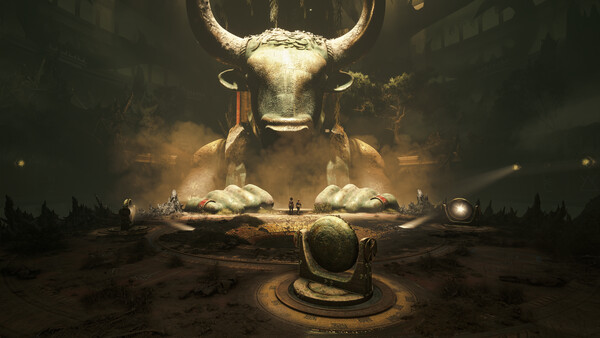
- The store description promises a mythical creature at the heart of a devastating curse, and the game shows you a colossal bull-headed figure. It is the myth the whole island is organised around.
- How faithful is it to the myth?
- Not very, deliberately. A reviewer who finished the game says Sophia's backstory is woven into the Theseus legend with substantial changes to that story — for him, changes big enough to undercut why it was used at all.
- Is there a maze?
- Yes. The game describes a treacherous maze to navigate while an army chases you, which is where the labyrinth of the myth ends up in the design.
Where the myth turns into mechanics
The interesting part is that the legend is not just set dressing — each piece of it became something you operate. Three of them, in the order you meet them.
You carry a stolen Minoan sphere, and the island's puzzles run on bending light through it — a force the fiction credits to Daedalus. The first real gauntlet of them is a statue that will not move until you raise its hands and then its head, and the last pair of symbols is not on the floor with the others. It is on the statue itself.
Deep in the labyrinth Ariadne speaks to Sophia and lays a glowing thread along the walls and floor, linking permanent light sources. It works as the myth's thread works — except the game is not strict about it: the paths interconnect, so the thread is guidance rather than the only route.
It is a fight, not a chase. The encounter is built around burning the tendrils along its body so the pustules on its shoulders can be burst — which tells you the series' fire-and-light logic survived the move to melee combat intact.
Chapter numbers are where each element first matters, not the only place it appears. Specific puzzle solutions are deliberately not here — this page is about the shape, and knowing the shape is what makes the puzzles readable.
The Minotaur represents violence, instinct, loss of control.
The two timelines
The game shifts between Sophia’s Middle Ages and ancient Minoan times, and it is explicit that echoes of the past shape the battles of the present. That is also the connective tissue back to the rest of the series: the story is described as turning on the Macula’s legacy, the same affliction the earlier games are about.
Chapter names and how far players get through them are on the chapter list. This page stays on setting and myth, because that is what can be established without walking you through the story.